
The Bishop Directive
Bishop returns in a high-stakes operation that pushes him further than ever before.

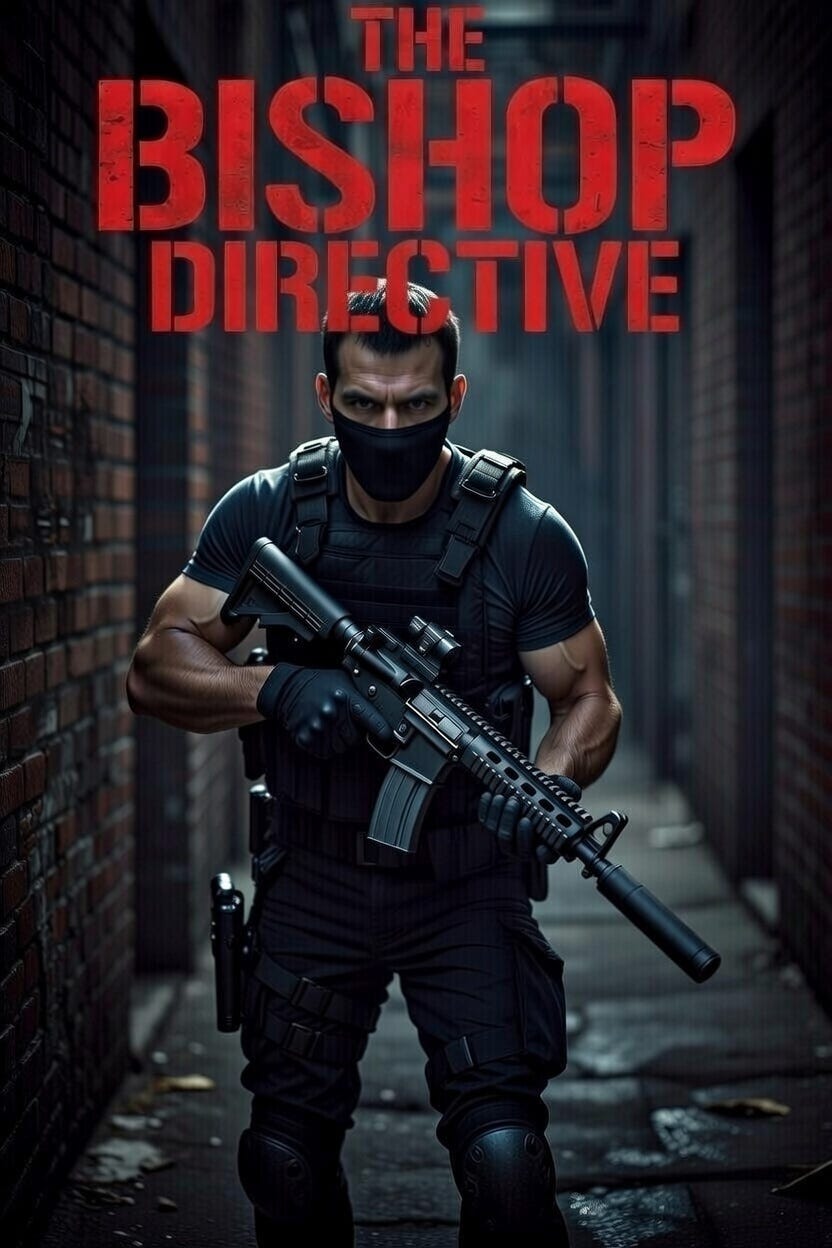
This chapter marks the return of The Bishop Directive.
The story begins here on Substack, released in serialized form, one chapter at a time. This is intentional. The pacing, the tension, and the structure are designed to build the way this story is meant to be experienced.
At the same time, work is underway to publish the full novel as part of a planned trilogy. What appears here is not a rough draft or an experiment. It is the opening movement of a larger story that will ultimately live as a complete book.
For now, this is where it starts.
Welcome back to Bishop.
Chapter One: The Worst Day
The van smelled like fear.
Bishop sat in the back, his shoulders against the cold steel panel, feeling every crack and pothole through his spine. Tripoli at night. The kind of city where men disappeared and no one asked questions.
Three contractors across from him. Private military. The kind who’d done wet work in a dozen countries and learned to keep their mouths shut about it. They stared at nothing, faces washed green in the glow of the dash lights. None of them had spoken since leaving the staging area.
Bishop’s fingers found the pill bottle in his jacket pocket. Counted the remaining capsules by touch. Eleven. He’d need to resupply soon. The thought came and went, clinical, like checking his ammunition count. Which he also did. Two magazines for the Glock 19 at his hip. Four for the suppressed HK416 between his knees. Enough to solve most problems.
Not enough to solve all of them.
“Five minutes,” the driver said.
Nobody answered.
The operation was supposed to be simple. Extract an asset from a safehouse on the city’s eastern edge. Former Syrian intelligence officer with information someone wanted badly enough to pay Bishop’s rate. Three hundred thousand, half up front. Clean documentation. No questions asked. In and out. Wheels up by midnight.
Bishop didn’t believe in simple anymore.
He checked his watch. 2247 local. Thirteen minutes behind schedule because of a militia checkpoint that had required a cash solution. Thirteen minutes was a lifetime in a city like this. Long enough for positions to shift. Long enough for plans to change. Long enough for everything to go wrong.
The van lurched to a stop. Bishop was moving before the engine died, his hand on the door release, the HK416 coming up to a low ready position. Muscle memory. Fifteen years of entries and exits. His body knew what to do before his mind caught up.
The night air hit him like a wall. Hot. Dry. Thick with the smell of diesel and garbage and something else underneath it all.
Copper. Old blood.
His grey eyes swept the street. Narrow. Buildings pressing in from both sides. Ottoman-era construction gone to ruin, bullet holes from a dozen different conflicts pocking the facades like smallpox scars. No lights in the windows. No movement. No dogs. No beggars. The kind of quiet that made the hair stand up on the back of his neck.
“I don’t like this,” one of the contractors muttered. Big guy. Neck like a tree trunk. South African accent.
Bishop didn’t either. But he was already moving, boots grinding against loose gravel as he advanced toward the target building. A two-story structure at the end of the alley. Metal door. Bars on the windows. Peeling paint that might have been blue once. The kind of place where bad things happened to good people.
He signaled the team to spread out. Two left, one right. Standard approach pattern. His eyes swept the rooftops, the darkened windows, the shadows pooling between buildings. Counting the angles. Calculating fields of fire. The roofline to the east offered clear sight lines to the target. So did the minaret of a small mosque three hundred meters out.
Nothing moved.
That was the problem.
There should have been security. The asset was valuable enough to warrant protection. Two men at minimum. Rotating shifts. Eyes on the street. Instead, the alley was dead. Empty. Waiting.
Bishop felt it in his gut. The wrongness of it. The same feeling he’d had in Aleppo before the ambush that cost him six months in a German hospital. The same feeling he’d had in Fallujah when the building next to his position had disintegrated in a shower of concrete and fire.
Walk away.
But he couldn’t. The job was the job. He’d taken the money. Made the commitment. And somewhere in the back of his mind, behind the pills and the pain and the faces of dead men he saw every time he closed his eyes, there was still the operator. Still the weapon. Still the thing that got pointed at problems until they stopped being problems.
Bishop reached the door. Pressed his back against the wall beside it. The contractor on his left mirrored the position. The other two took up covering angles on the street.
He listened.
Silence.
He tried the handle. Unlocked.
The wrongness intensified, coiling in his chest like a snake. Everything about this was bad. The open door. The empty street. The silence pressing in from all sides. Fifteen years of combat operations had taught him to trust his instincts, and right now his instincts were screaming at him to fall back, regroup, abort the mission.
Bishop pushed through the door.
The smell hit him first. Blood. Fresh. Mixed with something sharper underneath it. Burned flesh. His eyes adjusted to the darkness, the green wash of ambient light filtering through a cracked window revealing what was left of the room.
A chair in the center. Metal. Bolted to the concrete floor.
A body in the chair.
Bishop moved closer, his weapon sweeping the corners, checking the shadows. Clear. The room was empty except for the dead man and the tools scattered around him. Pliers. A propane torch. A car battery with jumper cables still attached. A bucket of water tinged pink.
They’d worked him over for hours. Maybe days. The asset’s face was swollen beyond recognition, his eyes nothing but dark slits in purple flesh. His fingers were broken and twisted at wrong angles, the nails torn out one by one. Burn marks ran up his arms in precise parallel lines. The pattern of a professional. The kind of interrogation that extracted everything a person knew and then kept going, just to be sure.
The asset was gone. Whatever secrets he’d been carrying in his head now belonged to someone else.
Bishop crouched, checked for a pulse he knew he wouldn’t find. The skin was still warm. Body temperature hadn’t dropped yet. They’d missed the kill by less than an hour.
“We’re late,” the South African said from the doorway.
Bishop didn’t turn. His mind was already working, running through the implications. The timing was too perfect. They’d been delayed at the checkpoint. Held just long enough. Led to this exact moment. To this exact scene.
This wasn’t a failed extraction.
This was a message.
He opened his mouth to give the order to fall back. The words never made it out.
The first shot cracked through the night like a bone breaking.
The South African went down hard, the round punching through his throat and out the back of his neck in a spray of arterial blood. His body hit the floor with a wet thud. His hands clawed at the wound for three seconds before the light left his eyes.
Bishop was already moving. Diving. Rolling. The crack of the second shot split the air where his head had been a heartbeat before. Stone chips exploded from the wall. He felt them pepper the back of his neck like hot needles.
“Sniper!” he shouted, but the word was swallowed by the chaos erupting around him.
The remaining two contractors were firing blind into the darkness, their muzzle flashes strobing the alley with harsh white light. Undisciplined. Panicked. Burning through magazines at shadows. Exactly what the shooter wanted.
Bishop hit the ground behind a concrete barrier, pressed himself flat, made his profile as small as possible. Sniper. Elevated position. East side, based on the angle of entry. He’d heard the report a fraction of a second after the impact. Supersonic round. The distinctive crack-thump of a rifle bullet breaking the sound barrier. Close. Maybe two hundred meters.
Another shot. One of the contractors screamed. A short, sharp sound that ended in a wet gurgle. Then silence.
Two down.
The last one was still firing, emptying his magazine into the rooftops. Bishop could hear him screaming something in Afrikaans. Fear and rage and the desperate need to do something, anything.
“Get down!” Bishop hissed.
Too late.
The contractor broke cover, trying to make it back to the van. Panicked. Stupid. Dead before he’d gone three steps, the round catching him center mass and spinning him into the wall like a puppet with its strings cut.
Silence fell over the alley. Thick. Heavy. Broken only by the distant wail of a muezzin calling the faithful to prayer.
Bishop didn’t move. Didn’t breathe. He counted the seconds between shots, mapped the angles in his head, waited for the pattern to emerge. The sniper was disciplined. Taking their time. Not rushing. Not getting greedy. One shot, one kill. Professional work.
Like the men who’d tortured the asset.
Like the checkpoint that had delayed them.
Everything connected. Everything planned. He’d walked into a kill box, and now it was closing around him.
There.
Movement on the roofline. A silhouette shifted against the faint amber glow of the city’s light pollution. The sniper was repositioning. Trying to get a better angle on his position behind the barrier. Bishop didn’t hear a thing. He read it. Fifteen years of hunting men taught you where they moved, when they moved, why they moved. The shooter had been static too long. The angle was compromised. They’d shift east to reacquire.
He’d spent a decade learning to think like the men who wanted to kill him.
Bishop exploded from cover, sprinting for the building opposite. Another crack. The round sparked off stone inches from his boot. He didn’t slow. Didn’t look back. Hit the wall and pressed himself into a recessed doorway, his pulse hammering.
The sniper had a problem now. Bishop was too close to the building for a clean shot. They’d have to expose themselves to get eyes on him. Give him an opening.
He checked his weapon. Round chambered. Suppressor secure. The HK416 was an extension of his body after years of use. He’d carried one through Syria, Iraq, Afghanistan. Through operations that didn’t exist on any official record. The rifle had never failed him.
Bishop moved along the wall, staying in the shadows, working toward the building’s entrance. Old residential structure. Probably abandoned. Fire escape on the north side, visible from his current position. The sniper would be watching it. Expecting him to go up that way.
He went through the front instead.
The door was locked. He stepped back, raised his boot, and kicked just below the handle. The frame splintered. The door swung inward.
Dark inside. Bishop let his eyes adjust, then moved. Flowing through the building like water. Checking corners. Clearing rooms. The stink of old urine and mold. Abandoned furniture covered in dust. Graffiti on the walls in Arabic and something that might have been Italian.
Stairwell on his left. He took the steps two at a time, his boots barely making a sound on the worn concrete. Second floor. Third. His thighs burned. His lungs ached. The pills in his pocket felt heavier with every step.
Not now. Not yet.
The rooftop access was ahead. A metal door hanging half off its hinges. Light leaked through the gap. Moonlight.
Bishop paused. Listened.
Breathing. Shallow. Fast. Someone trying to control their fear and failing.
He moved to the side of the door, weapon up. Took a breath. Let it out slow. Then he pushed through.
The rooftop spread out before him. A maze of HVAC units and satellite dishes and accumulated garbage. The sniper was forty feet away, already turning, already bringing their rifle around.
Bishop fired twice.
The suppressed rounds made sounds like heavy coughs. The first caught the sniper in the shoulder, spinning them. The second punched through their chest and dropped them.
The rifle clattered against concrete. The body followed.
Bishop crossed the distance fast, keeping his weapon trained on the fallen figure. Young. Male. Early twenties at most. Scraggly beard. Knock-off tactical gear. Everything about him screamed amateur.
A proxy. Bait for the bait.
The kid was still alive. Gasping. His hands clutching the wound in his chest. Blood bubbled at his lips with each breath. Sucking chest wound. He had minutes.
Bishop crouched beside him. Kept his voice low. “Who sent you?”
The kid’s eyes were wide. Terrified. His mouth worked but nothing came out except a wet wheeze.
“You’re dying,” Bishop said. “Nothing changes that. But you can go fast or slow. Your choice.”
The kid coughed. Blood sprayed across his chin. His hand reached toward his jacket pocket, trembling.
Bishop caught his wrist. Squeezed until he felt bones grind together. “Don’t.”
“You were...” The kid’s voice was barely a whisper. “Never supposed to... make it this far.”
“What does that mean?”
“Bait.” The word came out wet. Strangled. “You’re just... bait.”
The kid’s body convulsed. His back arched off the concrete. Then he went still, his eyes fixed on something Bishop couldn’t see.
Bishop stood slowly. The word sinking in like poison.
Bait.
He wasn’t the target. He was the distraction.
The realization hit him with terrible clarity. While he’d been fighting through an ambush, while his team was being slaughtered, something else was happening. Someone else was being taken.
He crossed to the edge of the rooftop. Looked down at the street below.
The bodies of his team lay where they’d fallen. The van sat empty, engine still running, doors hanging open. And beyond that, at the far end of the alley, headlights.
Two black SUVs. Chevrolet Suburbans. The kind used by private military contractors. The kind used by people who made problems disappear.
Bishop watched as figures in tactical gear moved around the vehicles. Six of them. Maybe more. They weren’t in a hurry. They’d already won. Already gotten what they came for.
Then he saw her.
They dragged her out of a building across the street. A woman. Dark hair, tangled and matted. Athletic build. Her hands were bound behind her back with zip ties. A black hood covered her head. She was fighting, throwing her weight against her captors, trying to break free.
One of the men hit her. A short, vicious blow to the stomach that doubled her over. She dropped to her knees. He grabbed a fistful of her hair through the hood and yanked her back up.
Something twisted in Bishop’s chest. Something he hadn’t felt in a long time.
He raised his rifle. Sighted on the man who’d hit her. Two hundred meters. Elevated position. No wind to speak of. Easy shot. He could put a round through the man’s brainstem before anyone knew what happened.
Then what?
The math didn’t work. He could drop two, maybe three before they had her in the vehicle. Then they’d use her as a shield or put a bullet in her head. Either way, she’d be dead.
Bishop lowered the weapon. Watched as they shoved her into the back of the SUV. Watched as the doors slammed shut. Watched as the vehicles pulled away, their taillights bleeding red into the darkness.
Gone.
He stood alone on the rooftop. The bodies of his team below. The body of the dead sniper behind him. The city stretched out in all directions, dark and indifferent.
The operation was blown. The asset was dead. And someone had orchestrated the whole thing just to grab one woman.
Why?
Bishop pulled the comm device from the dead sniper’s vest. Standard encrypted radio. Chinese manufacture. He keyed it on, held it to his ear.
Static. Then a voice. Male. Cold. Controlled.
“Confirm package secure.”
Bishop hesitated for one second. Then he pressed the transmit button.
“Who is she?”
Silence on the line. Long. Heavy.
“Bishop.” The voice had changed. The professional detachment stripped away. Something else underneath. Recognition. “You should be dead.”
“Disappointed?”
A pause. When the voice came back, there was something that might have been amusement in it. “Not particularly. You were always just a contingency. The operation succeeded whether you lived or died.”
“What operation?”
“Above your pay grade. But I’ll give you some advice. Professional to professional.” The voice hardened. “Walk away. Whatever you think you saw tonight, forget it. Whatever questions you have, swallow them. The people I work for don’t tolerate loose ends. And right now, you’re exactly that.”
The line went dead.
Bishop stood in the darkness, the comm device heavy in his hand. His body ached. His team was dead. And somewhere in this city, a woman he’d never met was being taken to a place she’d never leave.
He should walk away. The voice was right about that. This wasn’t his fight. He’d been used. Manipulated. Fed into a meat grinder to serve someone else’s purpose. The smart play was to disappear. Find a hole. Wait for the heat to die.
That’s what a smart man would do.
Bishop reached into his pocket. Pulled out the pill bottle. Shook two capsules into his palm. The oxycodone gleamed pale in the moonlight.
The pain was always there. His back. His shoulder. The constant low throb from injuries that had never healed right. The pills made it manageable. Made him functional. Made him able to do the job.
He stared at them for a long moment.
Then he put them back.
Not yet.
He had work to do.
There was a man in the old quarter of the city. Halim. Former PLO intelligence. Now he ran an antique shop that served as a front for information trafficking. Bishop had saved his life once, a long time ago. It was the kind of debt that didn’t expire.
Halim would know something. He always did.
And if he didn’t, Bishop would find someone who did.
He moved to the fire escape. Began his descent into the city’s darkness. Below him, the dead lay still. The van’s engine finally sputtered and died.
The worst day of his life had just become someone else’s problem.
Bishop disappeared into the night. The city swallowed him whole, indifferent as always.
Somewhere behind him, the first of many sirens began to wail.
Somewhere ahead, a woman he didn’t know was running out of time.
And somewhere deeper still, in the shadows where men like Bishop had learned to live, the people who’d orchestrated this were already planning their next move. They thought they’d accounted for every variable. Planned for every contingency.
They hadn’t planned for him.
Not like this.
Bishop moved through the narrow streets, his mind already working on the problem. The woman was the key. Everything else, the dead asset, the ambush, his team bleeding out in that alley, all of it was just distraction. Cover. Someone had gone to extraordinary lengths to acquire her.
That made her valuable.
That made her leverage.
And leverage, in Bishop’s experience, was the only currency that mattered.
His hand brushed the pill bottle in his pocket one more time. The familiar shape. The familiar weight. The familiar promise of numbness.
Not yet.
He had questions that needed answers.
And he was very, very good at getting answers.
End of Chapter One
He's baaaaaccckk! Here we go.... can't wait to get back on the board and follow Bishop! So happy to see this post, Dallas!!
Where can we find the earlier Bishop posts or books?